Gasoline Injector Cleaner Formula
$ 59
Description
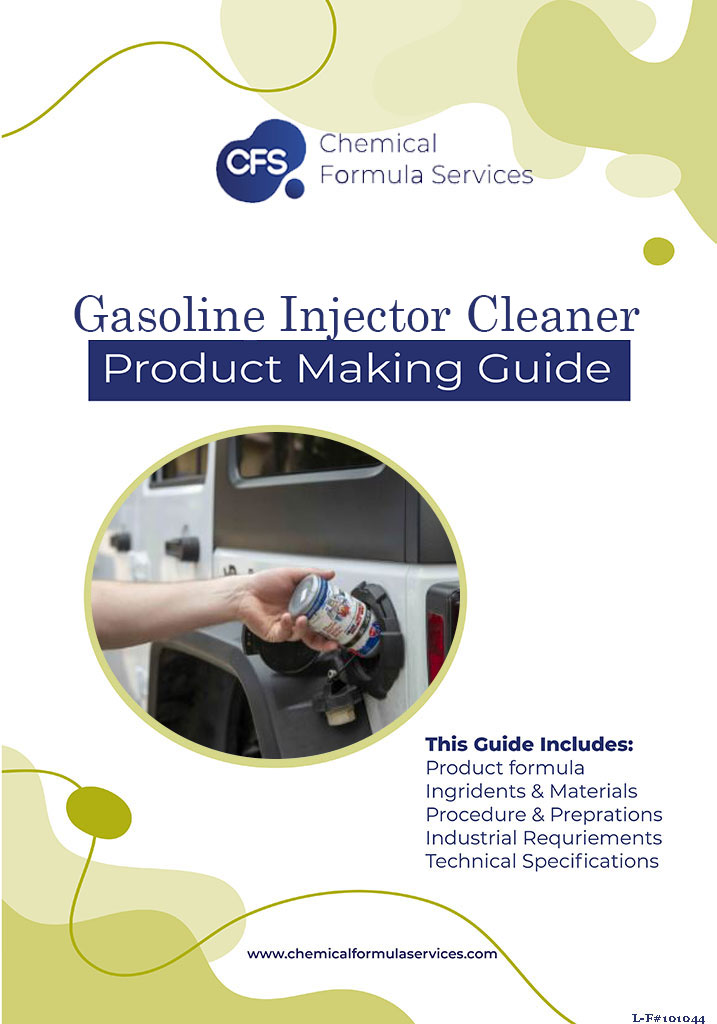
Gasoline Injector Cleaner (PEA-Based) Formula is a fuel system treatment formulated to remove and control deposit formation in spark-ignition gasoline engines. The product is based on polyether amine (PEA) chemistry, selected for its high thermal stability and effectiveness in addressing hard carbon and varnish deposits formed during gasoline combustion.
The cleaner is designed for direct addition into gasoline fuel, allowing it to circulate through the fuel tank, fuel lines, fuel pump, injectors, intake valves, and combustion chamber. During engine operation, the active detergent components interact with existing deposits, gradually breaking them down and enabling controlled removal through normal combustion processes.
This product category focuses on deposit control and fuel system cleanliness. It does not alter fuel grade, octane rating (unless specifically formulated), or engine calibration. Mechanical wear, injector damage, or sensor faults cannot be corrected through chemical treatment.
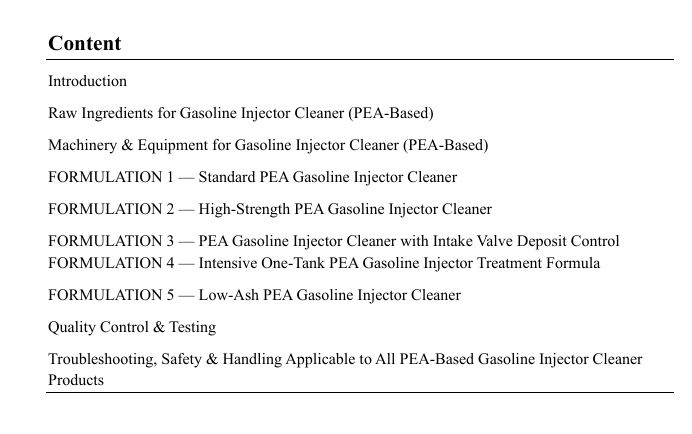
The book covers multiple gasoline-focused PEA formulations, including:
- Standard maintenance injector cleaners
- High-strength corrective cleaners
- Intake valve deposit control formulations (GDI-relevant)
- Intensive one-tank treatments
All formulations are designed for compatibility with modern gasoline engine technologies, including port fuel injection (PFI), gasoline direct injection (GDI), and turbocharged systems.
Industrial Applications
PEA-based gasoline injector cleaners are used across a wide range of gasoline-powered engines where injector precision and intake cleanliness directly affect performance and emissions.
Passenger Vehicles
- Naturally aspirated and turbocharged gasoline engines
- Port fuel injection (PFI) systems
- Gasoline direct injection (GDI) engines
GDI engines are particularly sensitive to intake valve deposits due to the absence of fuel wash over the valves.
Light Commercial & Fleet Vehicles
- Delivery vehicles and service fleets
- High-idle or urban stop-start duty cycles
These operating conditions accelerate deposit formation on injectors and intake components.
Performance & High-Output Engines
- Turbocharged and high-compression engines
- Engines operating at elevated temperatures
Such engines benefit from deposit control to maintain airflow, spray pattern accuracy, and combustion stability.
Small Engines & Utility Equipment
- Generators, pumps, and gasoline-powered equipment
- Engines exposed to fuel aging or extended storage
In these applications, deposit formation can occur even at low operating hours.