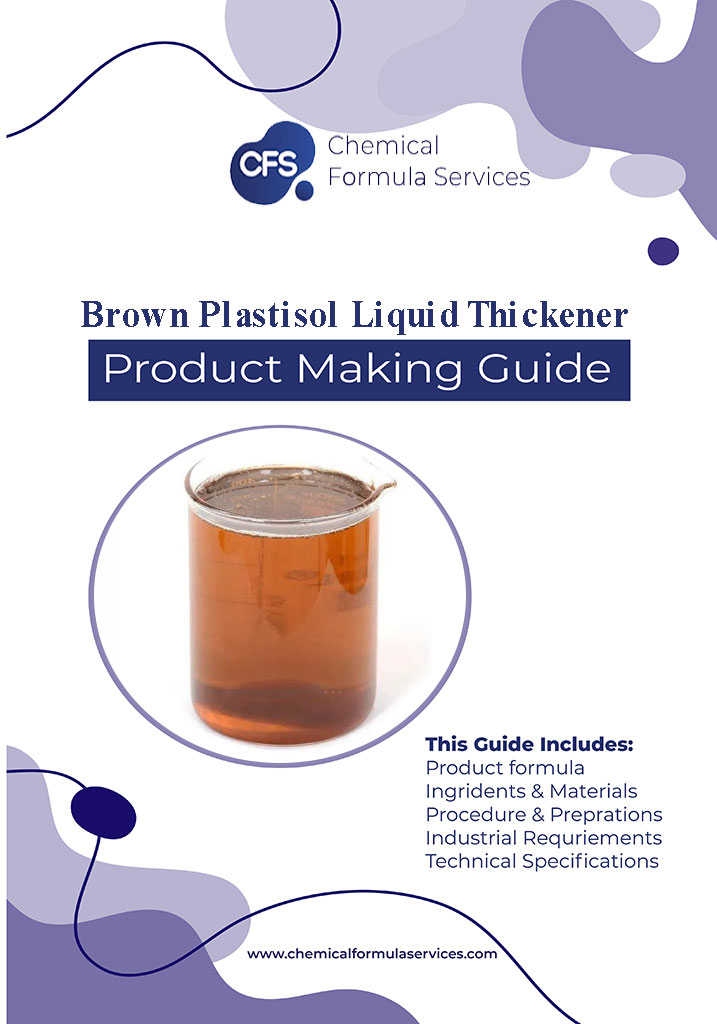
Brown Plastisol Liquid Thickener Formula
$ 70
Description
Among these additives, the Brown Plastisol Liquid Thickener formula has become a widely used industry solution. Manufacturers value it for its efficiency, compatibility, and ease of use across a wide range of plastisol ink systems.
In textile screen printing, controlling ink viscosity and flow is as important as color strength, opacity, and curing performance. Plastisol inks offer excellent durability and versatility, but printers must often adjust their rheology to match mesh count, print speed, fabric type, and special effects. Plastisol liquid thickeners play a critical role in achieving this control.
What Is a Brown Plastisol Liquid Thickener?
Despite its name, a brown plastisol liquid thickener contains no pigments or dyes. It does not change ink color or shade. The brown appearance results naturally from the interaction between PVC paste resin and plasticizers. This makes the thickener fully compatible with white, CMYK, fluorescent, puff, and specialty plastisol inks.
Ink manufacturers use this thickener to increase viscosity, improve body, and control flow without affecting print color or curing behavior.
Purpose of This Book
The book Brown Plastisol Liquid Thickener Formula serves as a practical, industry-focused guide for:
-
Plastisol ink formulators
-
Screen-printing ink manufacturers
-
Technical managers
-
Production and QC professionals
It helps readers develop high-performance, color-neutral plastisol thickeners suitable for both laboratory development and industrial production.
Chemistry and Formulation Approach
This guide goes beyond simple ingredient lists. It explains the chemistry behind plastisol thickening, including:
-
PVC paste resin swelling
-
Plasticizer–PVC interaction
-
Formation of thixotropic networks
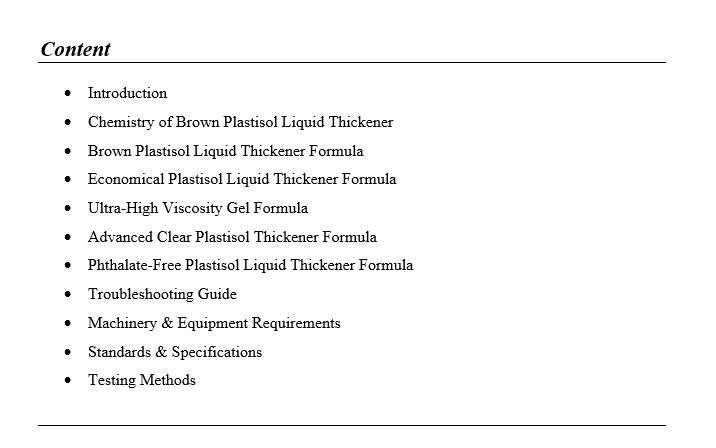
Each formulation appears in a fixed, production-ready format. The book clearly defines raw materials, functions, processing steps, and expected performance. It also covers phthalate-free systems, low-cure compatibility, economical versions, premium grades, and ultra-high-viscosity gel formulations.
Manufacturing, Testing, and Quality Control
In addition to formulations, the book covers:
-
Machinery and equipment requirements
-
Quality control standards
-
Testing methods for viscosity and stability
-
Common production problems and troubleshooting
-
Storage and shelf-life management
These sections help manufacturers scale production smoothly from lab trials to full factory output.
Who Should Use This Book?
Whether you manufacture plastisol inks, supply rheology additives, or optimize print performance on the production floor, this book provides the technical foundation and practical guidance needed for consistent results. It functions as both a formulation reference and a hands-on production manual for modern textile printing operations.